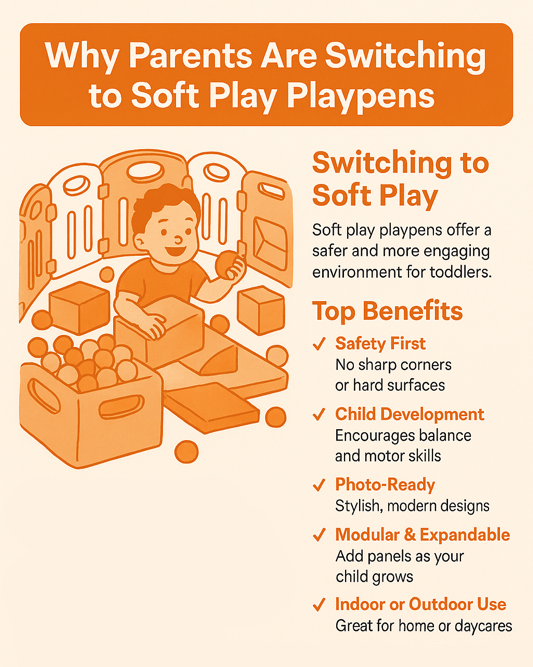
Why Parents Are Switching to Soft Play?
Okie Soft Play® · Play space inspiration
Little adventures.
A play space that fits.
Explore how soft play equipment and modular toddler fence panels can come together for a thoughtfully planned, supervised play area—at home or at your next celebration.
A good toddler play area makes room for curiosity: stacking, crawling, pretending and trying again. It should also work for the adults who set it up, supervise play and put everything away.
That is the appeal of a soft play setup. You can plan the activities, layout and look around your space. But before choosing a “soft play playpen,” it helps to understand what that phrase means—and which pieces you actually need.

What is a soft play playpen?
“Soft play playpen” is often used to describe a play area that combines a boundary with padded equipment. It is a shopping phrase, rather than a precise description of one product. A complete setup may include three separate elements:
- The boundary: compatible modular fence panels that define the play area.
- The surface: play mats selected for the equipment, floor and intended use.
- The activities: age-appropriate foam shapes, blocks or other play equipment.
Know what you are buying: Okie Soft Play toddler fence panels are plastic boundary panels, not foam-padded walls. Mats and soft play equipment are separate components. Adding padding does not make an enclosure injury-proof or suitable for sleep.
Why choose a modular soft play area?
A layout with a purpose
Plan a defined spot for play within a larger room. Start with measurements and leave enough room for adults to reach children and move around the setup.
Room for different activities
A few carefully chosen pieces can invite stacking, crawling and imaginative games. Match each activity to the children using it, with room between pieces.
A coordinated look
Build around a simple color palette for an everyday playroom or birthday theme. A cohesive setup can look inviting without filling every inch with equipment.
A thoughtful starting point
Choose the essentials first. Before expanding, reassess the available space, component compatibility and whether the setup still suits your child's abilities.

Soft play areas vs. traditional playpens
The right choice depends on the job you need it to do. A padded activity space, a modular fence and a manufactured play yard are different products; one should not automatically replace another.
| Consideration | Soft play area with fencing | Traditional playpen or play yard |
|---|---|---|
| Main purpose | A planned space for supervised activity using separate components. | A defined enclosure used as directed by its manufacturer. |
| Materials | May combine plastic fencing, mats and foam play pieces. | Often combines mesh or fabric with a rigid frame; designs vary. |
| Layout | Depends on compatible panels, assembly requirements and available space. | Usually has a manufacturer-defined footprint. |
| What is included | Fencing, gates, mats and activities may be sold separately. | Contents vary by model; review the complete product listing. |
| Safety considerations | Check each component and how the complete arrangement works together. | Follow the specific product's assembly, age, size and use limits. |
| Sleep | Not a sleep space. | Only use for sleep if the specific product is intended for it, following all instructions. |
On smaller screens, swipe across the table to see both options. No product category is automatically safer in every situation.
How to plan your toddler play area
- Measure before choosing equipment. Sketch the usable space, entry point and room needed for adults. Keep household walkways clear.
- Choose for the children using it. Check each item's age and use limits. Consider mobility and climbing ability as well as age.
- Plan the complete layout. Select compatible components and follow their instructions. Keep climbable equipment away from the fence perimeter.
- Keep activities manageable. Leave open space between pieces and give supervising adults a clear view. A smaller selection can make it easier to organize play.
- Inspect before every session. Check connections, supports, surfaces and any gate latch. Remove damaged components and keep an adult actively supervising.
Our toddler fence panel set includes five panels; a compatible gate is sold separately. The listed recommended age begins at approximately 18 months. Review the product instructions and your child's abilities before use.
From home playrooms to birthday parties
Everyday play at home
Give play a defined place in a living room or dedicated playroom. Choose a spot where an adult can stay involved, join in and easily reach every part of the arrangement.
Birthday parties and soft play rentals
Let the party theme guide the colors, then plan access and supervision around the activities. Assign adults to supervise the play area throughout the event, including busy arrival and cake times.
Daycares and shared spaces
A thoughtfully arranged activity zone can help organize a room. Before using equipment in a childcare or commercial setting, check its intended use alongside the facility's licensing, access and operating requirements.
Considering an outdoor event? The fence product page allows temporary use in suitable dry, calm conditions. Check every other component's outdoor-use instructions too, and avoid heat, rain, wind and nearby hazards.
What safety documentation really means
Look for documentation tied to the product you are purchasing. A Children's Product Certificate (CPC) is issued by the responsible manufacturer or importer to certify compliance with applicable children's product safety rules. It is not a blanket government endorsement of a brand.
Our fence panel product page describes testing against applicable provisions of ASTM F963 and ASTM F2049, along with regulated lead and phthalate requirements. Documentation applies to the tested product and production configuration; contact us to request the records relevant to your purchase.
Supervision comes first. These panels do not replace active adult supervision or a permanent protective barrier. Never use them as a pool, stair or traffic barrier. Stop using the enclosure if a child can climb over it. Soft play areas are for awake, supervised play—not sleep.
Build your space with Okie Soft Play®
Start with the footprint you have and the play experience you want to create. Explore our soft play fence panel collection, review the details for each component and put together a setup with a clear purpose.
Need help choosing? Contact our team with your room measurements, intended use and questions. We can help you work through the options before you order.
Frequently asked questions
Are soft play fence panels soft?
The phrase describes where they are used. Okie Soft Play fence panels are plastic; padded mats and foam equipment are separate pieces of the setup.
Can I use a toddler fence as a baby playpen?
Do not rely on the name alone. Check the specific product's intended age and use. A toddler activity boundary is not automatically suitable for an infant or a substitute for an infant sleep product.
Does a fence set include everything for soft play?
Review the listing carefully. Plan separately for any gate, flooring and activities, and confirm compatibility before combining components.
How should I clean a soft play setup?
Follow the care instructions for each material. Inspect equipment during cleaning, allow it to dry as directed and remove any damaged item before the next play session.
Make room for their next little adventure.
Bring your playroom or party idea together with a defined layout, thoughtfully chosen activities and hands-on supervision.